
Home / Asian Wedding Videographer Birmingham
An Asian wedding film in Birmingham records what photographs cannot — the vows, the speeches, the granthi or priest’s words, the laughter and the sound of the room. We film Sikh, Hindu, Gujarati, Muslim and fusion weddings across Birmingham and the West Midlands, planning multi-camera coverage and clean audio around your ceremony’s own rules.
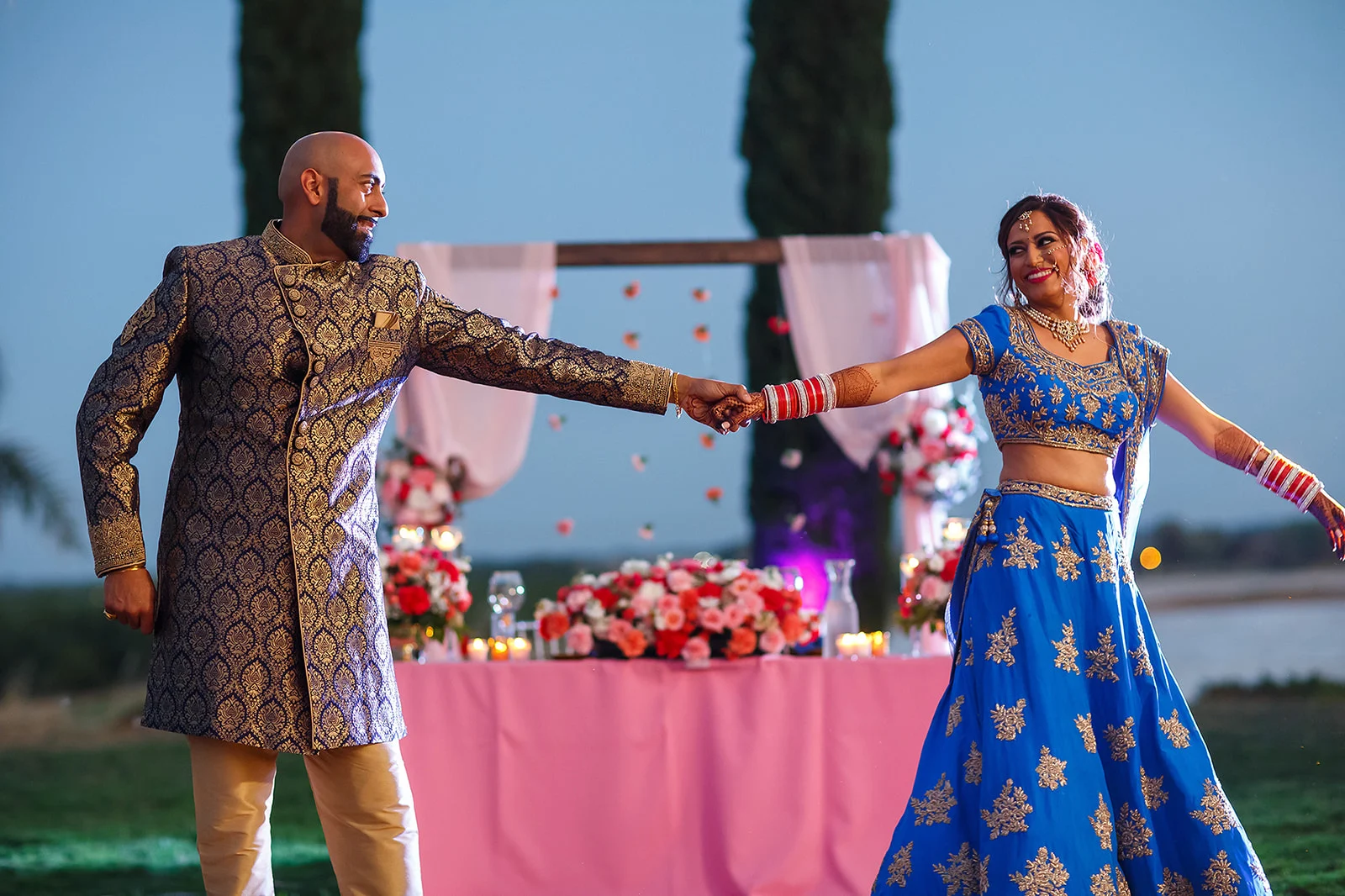
Multi-camera coverage of the moments that only happen once
A ceremony happens once, in real time, and a single locked-off camera will miss half of it. We plan multiple cameras so that the couple, the officiant and the key family members are all covered at the same moment — one camera holds a wide, safe frame of the whole ceremony while others catch expressions, hands and reactions. During the Anand Karaj, the Pheras or the Nikah, that redundancy is the difference between a film that tells the story and one with gaps in it.
Sound is the heart of a wedding film
Most of what makes a wedding film move people is audio, not video. We record the ceremony directly — the vows, the kirtan, the mantras, the Nikah — using dedicated audio rather than relying on the camera’s built-in microphone. Speeches, blessings and family reactions are captured separately so they are clear and usable in the edit.
Some ceremonies place limits on where microphones and cameras can go. We agree those with your officiant and the venue in advance, and plan the audio around what is permitted so nothing important is lost and nothing disrespectful happens.
Choose the film you want to watch
Different couples want different films, and a good package can include more than one. A highlight film (typically three to six minutes) is the cinematic short you will share most. A feature or full-length film tells the day in full. A social reel or trailer is cut for phones and stories. And a full ceremony recording keeps the Anand Karaj, Pheras or Nikah in its entirety for the family. Tell us which of these matter and we build the package around them.
Movement, light, stabilisation and drone
Cinematic movement comes from stabilised cameras and gimbals, planned to fit the space rather than get in the way of guests or the officiant. Low-light receptions need a videographer who can film cleanly without flooding the room with harsh light. Drone footage can open a film beautifully, but it depends on the venue, the weather and airspace rules on the day, so it is planned as an option rather than promised for every date.
Filming your ceremony, tradition by tradition
Every ceremony has its own rhythm, its own key moments and its own filming etiquette. These guides explain how we film each one:
Sikh wedding videography (Anand Karaj) · Hindu wedding videography · Gujarati wedding videography · Muslim wedding videography · Indian wedding videography
One videographer or two?
One videographer can film a single-location ceremony well with a multi-camera setup. Two are worth it when both families prepare at separate homes, when events overlap, or when you want full multi-angle coverage of a large ceremony and reception. As with photography, it is a coverage decision based on your day, not an automatic add-on.
Editing and delivery
After the wedding your footage is edited into the films you chose, colour-graded, and set to licensed music so you can share it safely online. We agree turnaround, revision arrangements and delivery format before you book. If you are booking film alongside stills, see our combined photography and film page, or compare what affects the price.
Questions couples ask
What does an Asian wedding videographer capture?
A wedding videographer records the moving image and, crucially, the sound of your day — the vows, the kirtan or mantras, the Nikah, the speeches and the reactions — filmed with multiple cameras and dedicated audio, then edited into a highlight film, a longer feature film and often a full ceremony recording.
Is the wedding audio recorded separately?
Yes. We record the ceremony and speeches with dedicated audio rather than the on-camera microphone, so the vows, blessings and speeches are clear in the final film. This is one of the biggest differences between a professional wedding film and phone footage.
Should we book photography and videography together?
Booking both together lets one crew plan a shared schedule so the photographer and videographer never block each other at the ceremony. It is usually better value and smoother on the day than hiring two separate suppliers who have never worked together.
Can the whole ceremony be filmed?
Yes. Alongside the highlight film we can provide a full-length recording of the Anand Karaj, Pheras or Nikah, subject to any filming restrictions set by your officiant or venue, which we agree in advance.
Is drone footage included?
Drone footage can be included where the venue, weather and airspace rules allow it on the day. Because those conditions vary, we plan it as an option rather than guaranteeing it for every wedding.