
Home / Gujarati Wedding Photographer Birmingham
Gujarati wedding photography in Birmingham needs a plan for the whole celebration: the home ceremonies, a busy garba floor, the welcome at the entrance and the family gathered around the mandap. We discuss each date and location with you so the coverage follows your family’s customs.
Gujarati wedding services
Start with your family’s running order
Gujarati weddings do not all follow one sequence. Tell us which ceremonies you are having, what your family calls them and who will lead them. Your priest’s schedule is the starting point for a Hindu ceremony; Jain and other Gujarati celebrations need their own brief. We do not treat a sample timeline as instructions for your wedding.
A useful first conversation covers the number of events, approximate guest count, both preparation addresses and whether you want photography, film or both. If two important events happen at once, tell us before choosing the team. One photographer cannot cover two homes simultaneously.
Chandlo Matli, home ceremonies and pithi
If Chandlo Matli is a separate family gathering, include its date rather than treating it as a small extra on the wedding day. For Ganesh Sthapana, Mandvo or Mandva Muhurat and Grah Shanti, share the start time, room layout and the relatives taking part. A compact room can fill before a camera position is available. Keeping one clear route helps us move without stepping between the family and the ceremony.
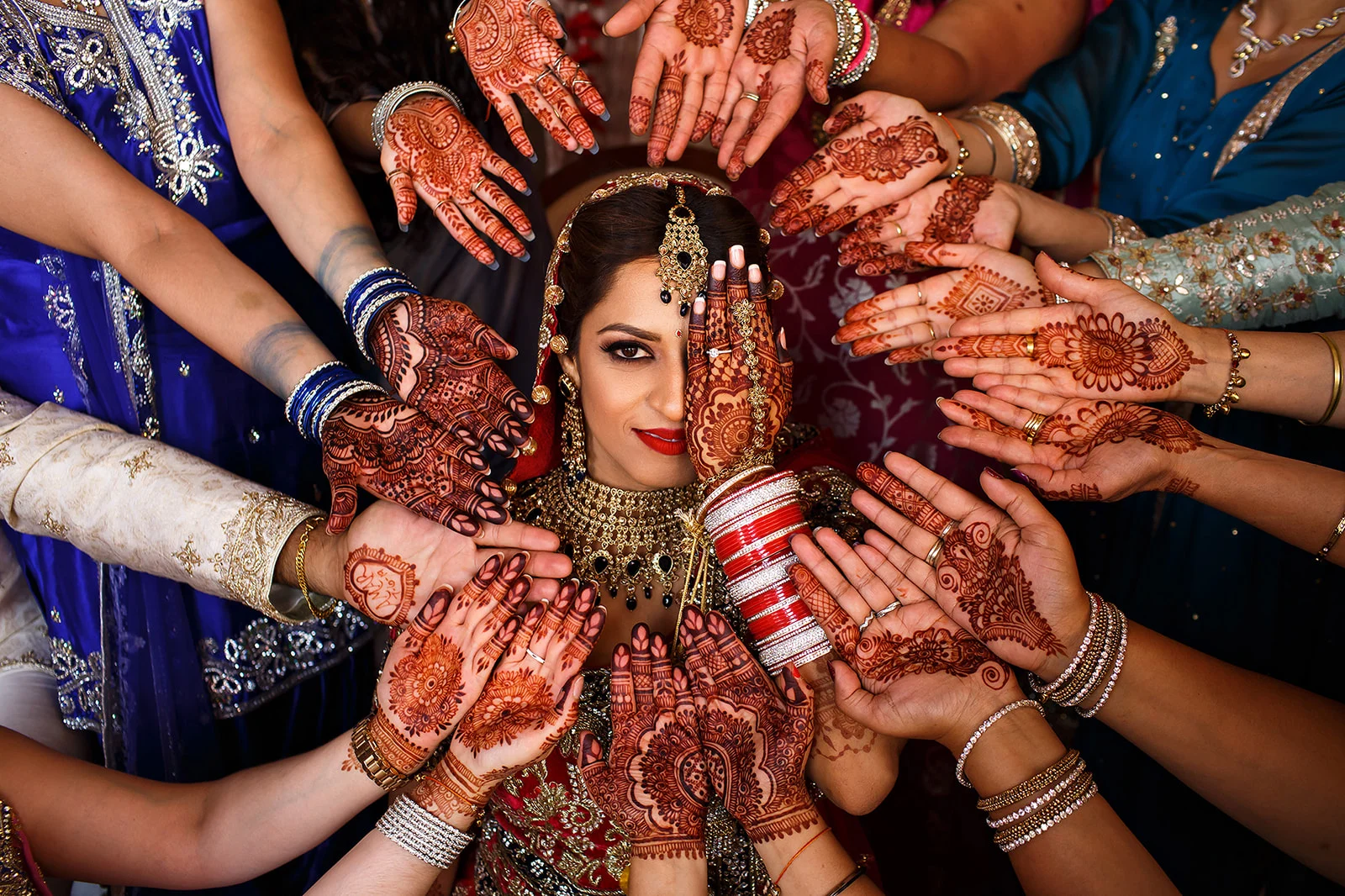
Pithi can change quickly from a seated ritual to a room full of laughter. We need to see the person applying the paste as well as the couple’s reaction. Tell us when elders will participate and whether the two families are celebrating at different homes. Mehndi detail photographs fit more comfortably before the next event than during a rushed departure.
Garba and raas: photograph the dancers and the room
For garba and raas, share the music programme, any choreographed performances and the point when the couple will join the dancing. Coverage should include the wider circles and family participation as well as close photographs. A fixed position at the stage will not show the whole evening.
Changing coloured light and moving dancers need a different approach from seated portraits. We discuss safe camera positions with the organiser and leave the dance routes clear. If you want film, confirm whether the brief includes complete performances, short highlights or both; these are different filming and editing requirements.
Jaan, ponkvu and the entrance
The arrival and welcome can become crowded before anyone reaches the mandap. Tell us which entrance the jaan will use, where ponkvu will happen and who is involved. A clear view of the greeting matters more than another posed photograph outside the doors.
Jaimala and Madhuparka may follow quickly within your family’s sequence. A short briefing with the priest and a nominated family contact helps us anticipate those changes. We should not need to ask the couple to pause a ritual because a supplier was still moving equipment.
Working around the mandap
Kanyadaan and Hasta Melap involve hands, expressions and the relatives beside you. A good plan accounts for the mandap pillars, floral arrangements and people seated around the couple. We agree camera positions before the ceremony and avoid making the priest or family work around equipment.
For the Agni ceremony, Mangal Pheras and Saptapadi, confirm the movement and sequence with your priest. We plan views of the couple and their families without crossing the ritual space. Sindoor and Mangalsutra, where included, can be brief and partly hidden from a distant camera. Positioning beforehand is more useful than asking for a repeat.
The ceremony discussion also covers flash, continuous lighting and where a videographer can place microphones. If photo and film are booked together, their sight lines must work together. Extra operators only help when there is room for them and a clear responsibility for each.
Vidaai, portraits and a separate reception
Vidaai needs time in the coverage even when the ceremony runs late. Tell us who will be present and whether departure is from the venue or a family home. We leave room for the family rather than arranging a sequence of repeated goodbyes.
For portraits, choose a short list of essential groups and ask one relative from each family to gather people. In Birmingham, a move between a home, ceremony venue and reception means more than driving time: unloading, parking, walking to the room and changing outfits all count. Keep a sheltered portrait option available and confirm when the reception room can be accessed.
Questions couples ask
Can you cover several days of Gujarati wedding events?
Send every date, venue and approximate start and finish. We can discuss photography and film event by event, with team availability and the final coverage confirmed in the proposal.
Do we need two photographers?
Consider two when preparations overlap at separate homes, or when the entrance and mandap need simultaneous coverage. Guest count alone does not decide the team: locations, timing and access matter too.
Are these rituals included at every Gujarati wedding?
No. Customs, terminology and religious practice vary. We use your family and officiant’s actual plan, including any rituals you omit or adapt.
From the preparations to the entrance


Plan the next part
Hindu ceremony coverage · Coordinated photography and film · Family photograph checklist · What affects the quote
Check availability for your wedding
Send the wedding date, garba or other event dates, Birmingham venue details and whether preparations are at one home or two.